Architecture
Technical Architecture
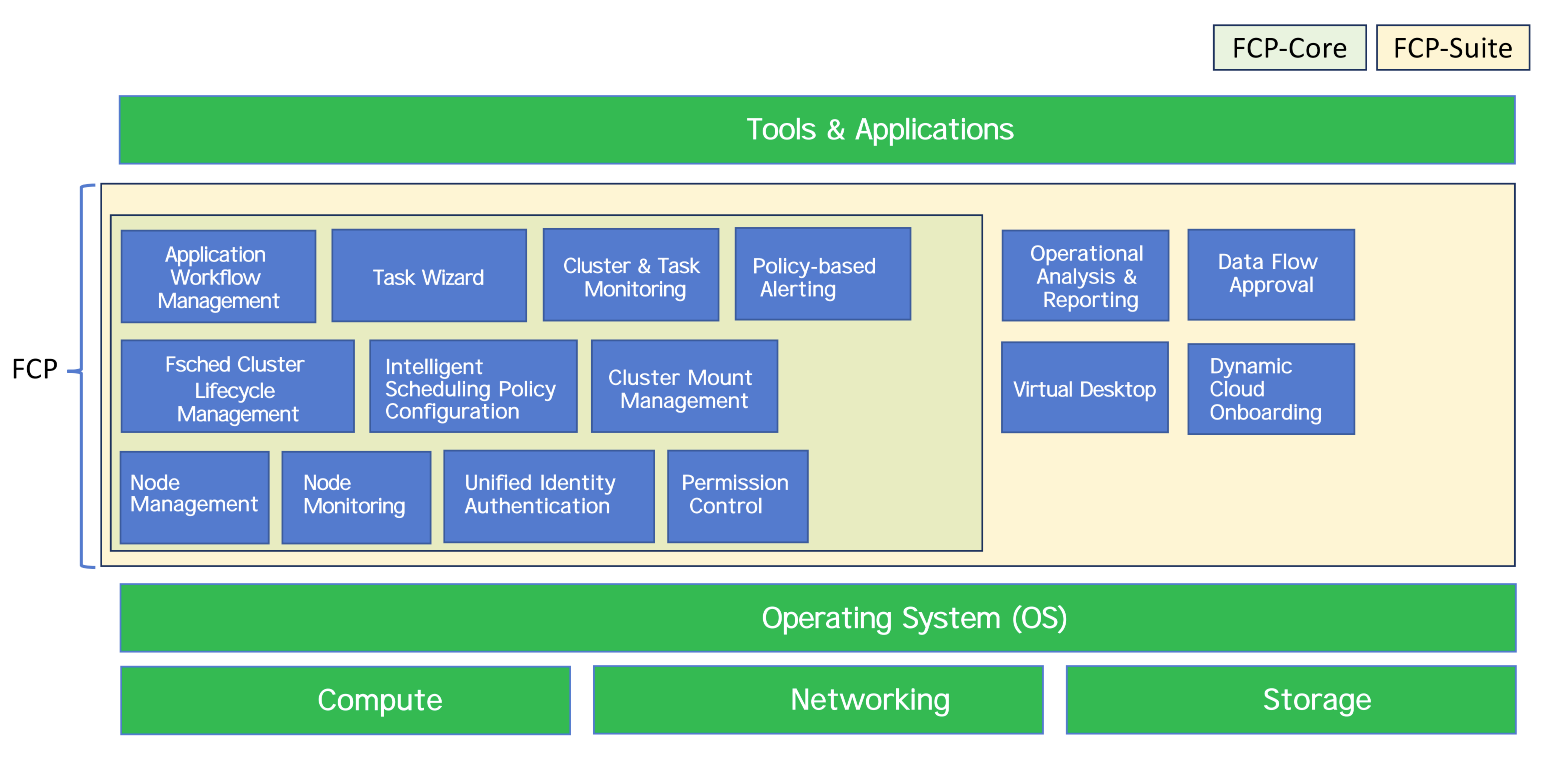
Architecture diagram for FCP-Core and FCP-Suite:
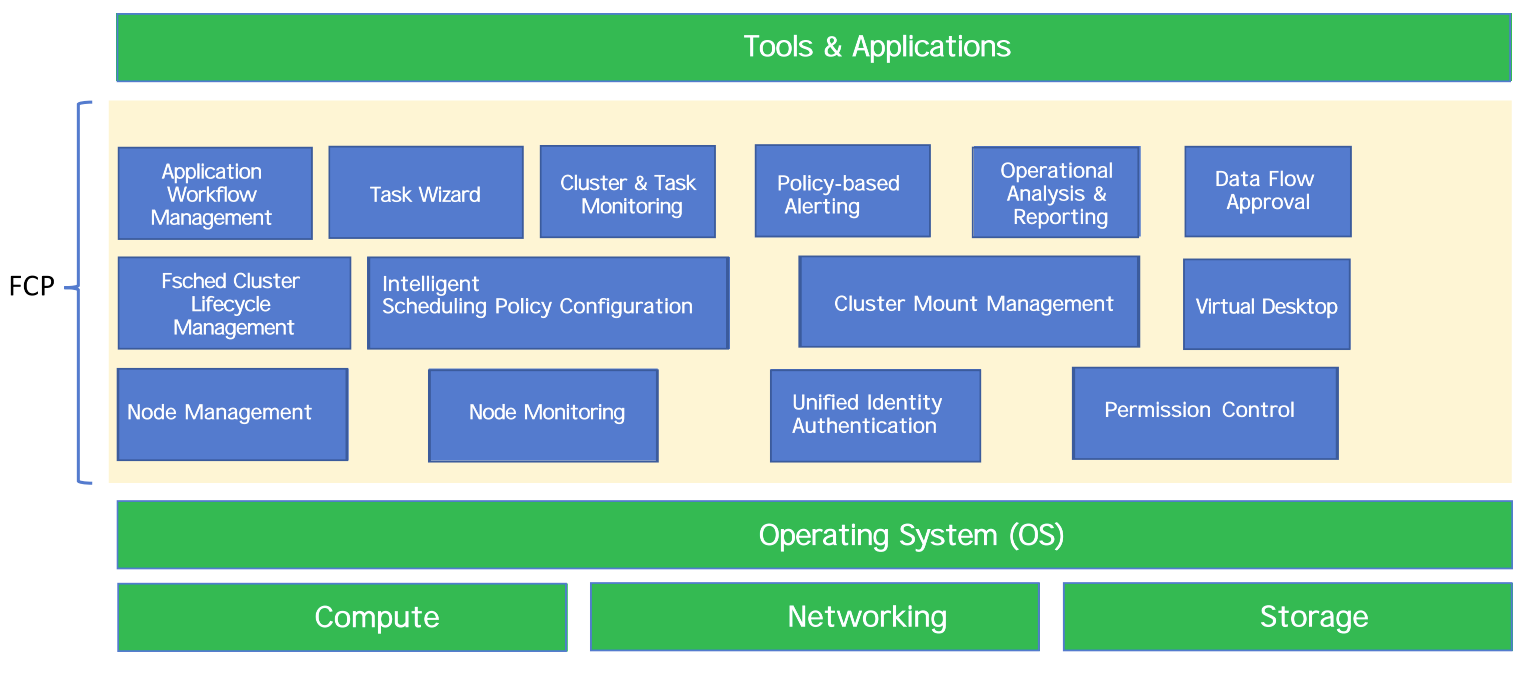
Architecture diagram for FCP-SE:
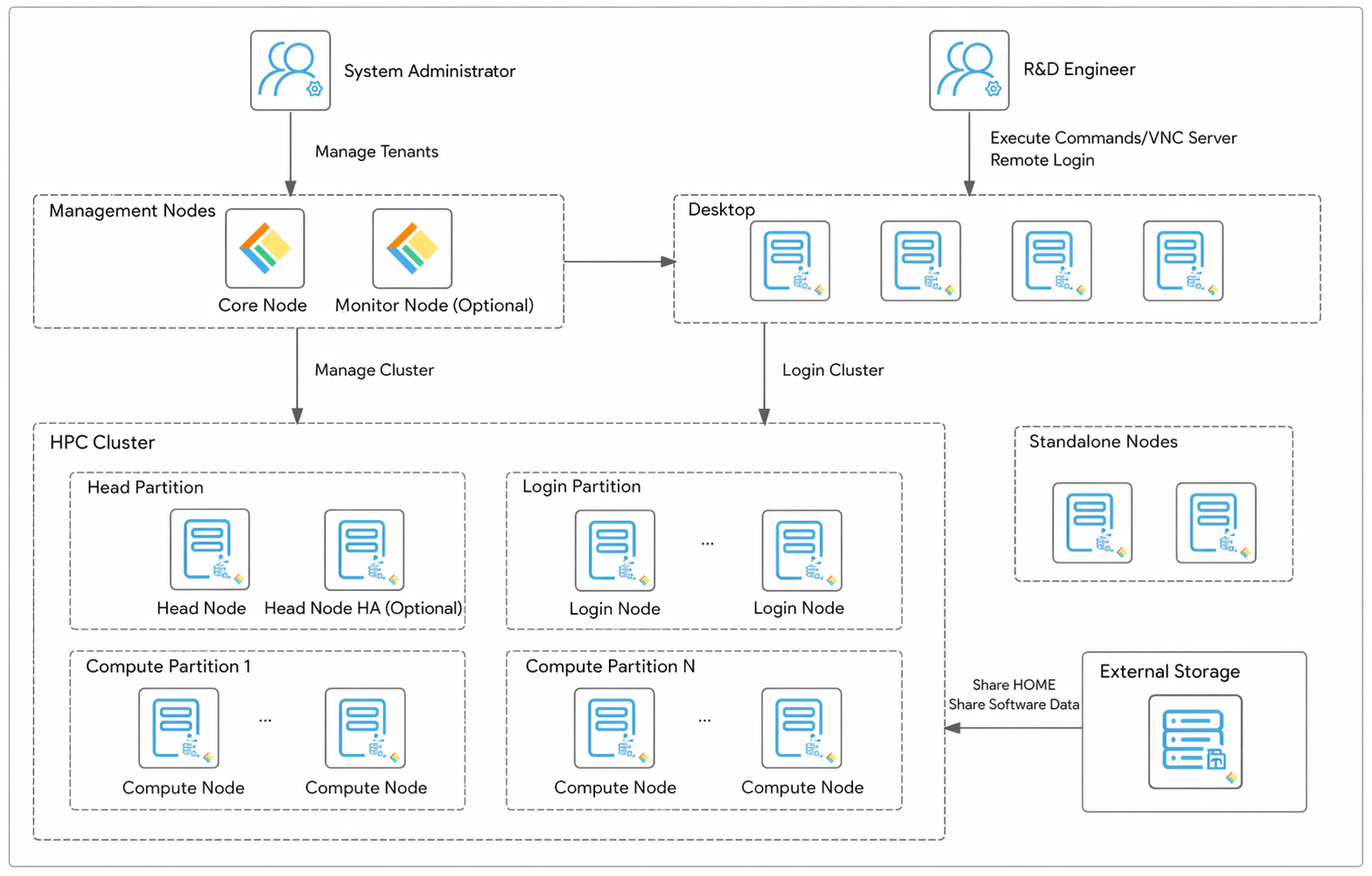
Deployment Architecture
Basic Concepts
Below are basic definitions of nodes/components in the FCP deployment architecture:
- Management nodes: include the Core node and the optional Monitor node.
- Core node: runs core services of the FCP platform that clusters depend on, such as the built-in LDAP server, SlurmDBD, and more.
- Monitor node: optional component used for real-time monitoring of cluster resource usage, task status, and performance metrics, supporting analytics and operational optimization.
- Desktop: nodes that provide remote visualization (remote desktop) capabilities.
- HPC cluster: a high-performance computing cluster based on the Fsched scheduler. An Fsched cluster consists of multiple nodes connected via network to execute compute workloads collaboratively. Fsched manages compute resources to ensure efficient scheduling and resource allocation. Cluster size can range from a few nodes to thousands.
- Partition: a logical grouping of jobs and nodes, used to split a cluster into subsets. Common partitions include head partition, compute partition, and login partition.
- Head node: the management node of the Fsched cluster, responsible for accepting job submissions and managing node/job status.
- Login node: also called a submit node on some HPC platforms. Used mainly for submitting compute jobs.
- Compute node: nodes where submitted compute jobs actually run.
- Dedicated node: a node reserved for specific tasks and not shared with other tasks.
- External storage: centralized storage system that provides a unified data access space for all nodes.
- R&D engineer: end users who run compute tasks on cluster resources via desktops or command line.
- System administrator: responsible for cluster deployment, maintenance, monitoring, and troubleshooting, ensuring stable operation and managing user permissions and resource allocation.